Ingredients
Method
- Bring a large pot of generously salted water to a rolling boil. You want it so salty it tastes like the sea — this is the only chance to season the pasta from within. Add the linguine and cook until al dente, about 1 minute less than the packet suggests. The pasta should feel firm to the bite, with a tiny white dot in the centre when you cut a piece.
- While the pasta cooks, set a large frying pan over medium heat. Add 2 tablespoons of the butter. Watch it melt and then begin to foam. When the foam subsides and the butter smells nutty and turns a pale golden brown — that warm, toasty scent is your cue — add the garlic and shallot. Stir constantly for about 1 minute, until the garlic is fragrant but not coloured. The aroma should be mellow and sweet, not sharp or burnt.
- Increase the heat to medium-high. Add the shrimp in a single layer — do not crowd them. You should hear a vigorous sizzle. Let them cook undisturbed for 90 seconds. The edges will turn pink and opaque. Flip each shrimp over. Cook for another 60-90 seconds. The shrimp should be curled into a loose ‘C’ shape, feel firm to the touch, and be completely pink with no grey spots. Use a slotted spoon to transfer them to a plate.
- Reduce the heat to low. Pour the chicken stock into the pan, scraping up any browned bits from the bottom with a wooden spoon. This is called deglazing, and it captures all that savoury flavour. Let it simmer gently for 2 minutes, until it reduces slightly and looks glossy.
- Add the remaining 2 tablespoons of butter, the lemon juice, lemon zest, and red pepper flakes. Swirl the pan until the butter is fully melted and the sauce looks emulsified and silky. It should coat the back of a spoon. Taste and adjust salt and pepper.
- Drain the pasta, reserving about 200ml of the starchy cooking water. Add the hot pasta directly to the sauce in the pan. Toss everything together with tongs, adding splashes of the reserved pasta water a little at a time. You want the sauce to become creamy and cling to every strand of pasta. Look for a velvety sheen — that’s the starch and butter working together.
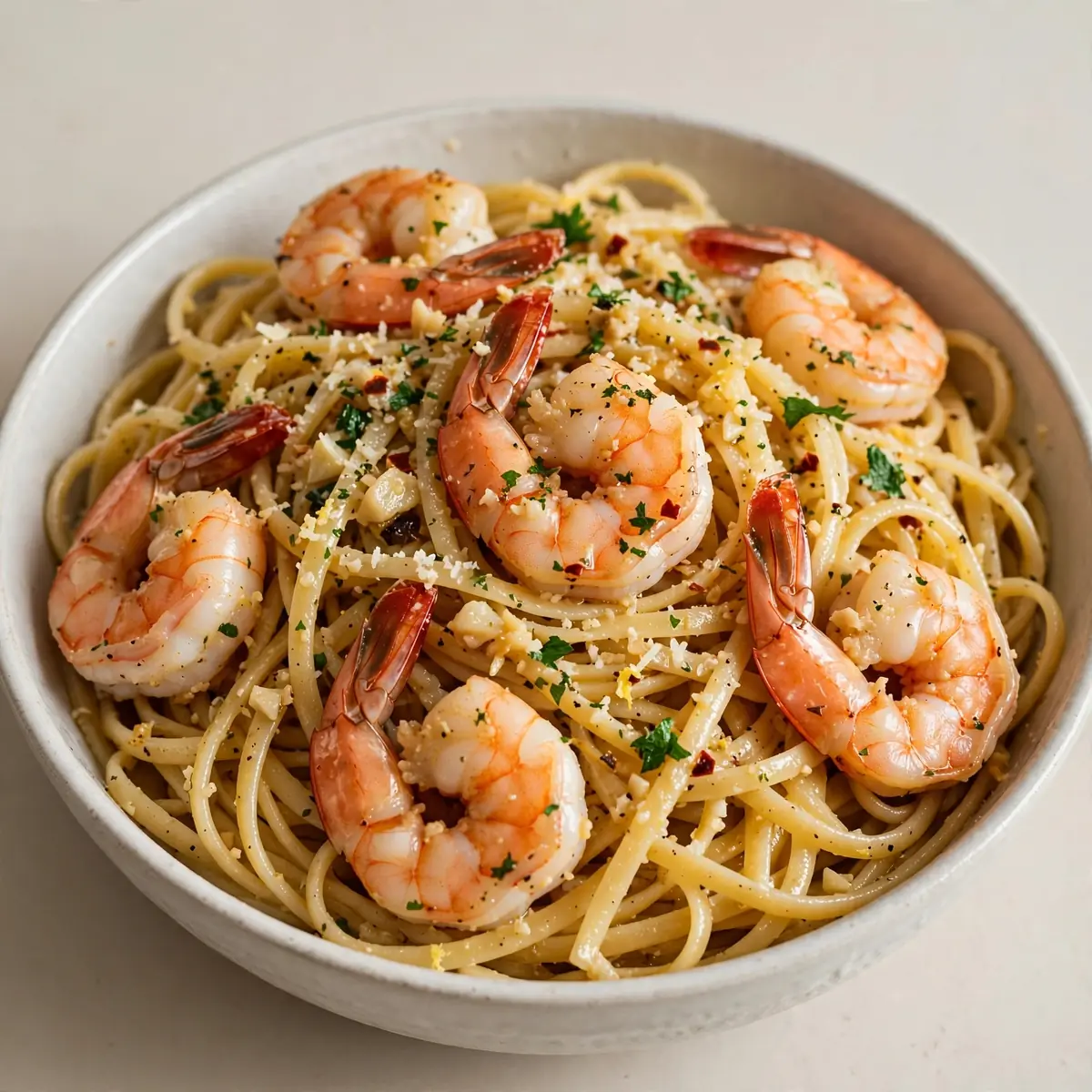
- Return the shrimp to the pan, along with the Parmesan and half the parsley. Toss gently to combine, just until the shrimp are heated through. The cheese should melt into the sauce, making it even richer. Serve immediately, topped with the remaining parsley and extra Parmesan.
Notes
Do not overcook the shrimp; they should be just firm and pink. Adjust red pepper flakes to your spice preference.