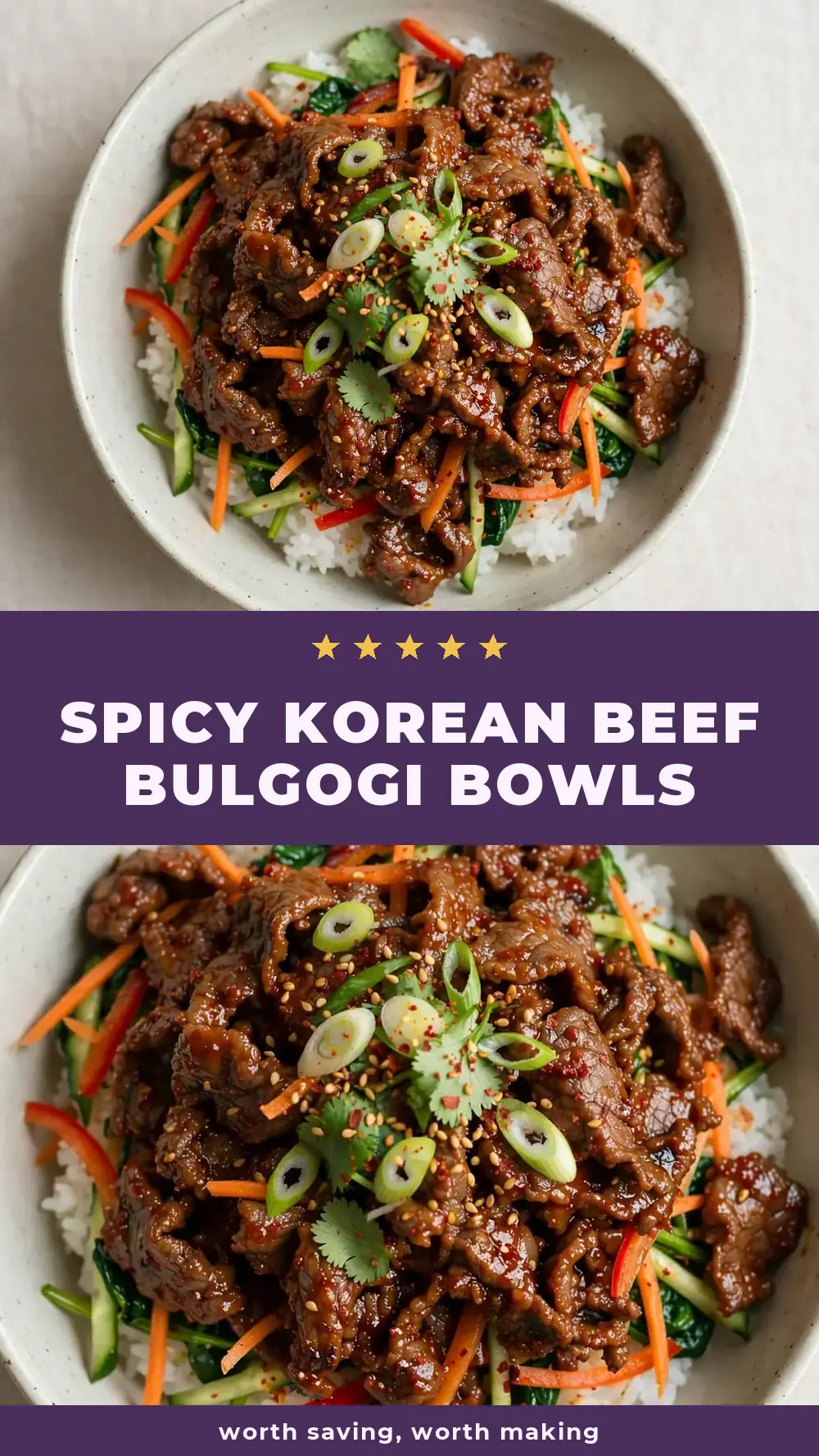
Spicy Korean Beef Bulgogi Bowls
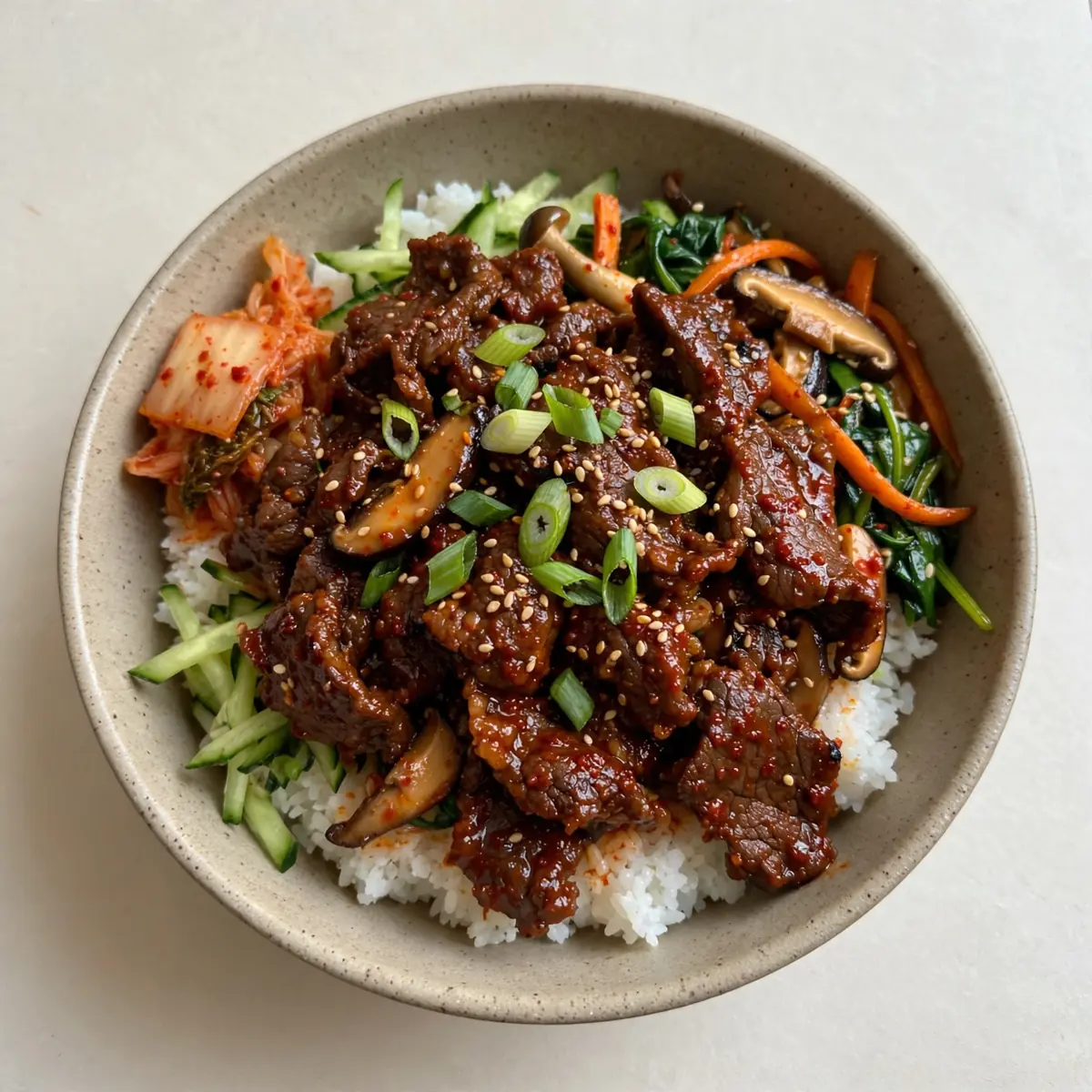
When my three children were younger, I discovered that the secret to a peaceful Tuesday night was a bowl of something so packed with flavour that even the pickiest eater would pause their protests to take a bite. This Spicy Korean Beef Bulgogi Bowls recipe became my secret weapon: it comes together in under thirty minutes, uses just one pan, and tastes like a takeaway treat without the delivery wait or the price tag.
Recipe Overview
- Prep time: 10 minutes
- Cook time: 15 minutes
- Total time: 25 minutes
- Servings: 4 generous bowls
- Difficulty: Easy
Why You’ll Love This Spicy Korean Beef Bulgogi Bowls
- One-pan cooking: Everything from the beef to the sauce happens in a single skillet, meaning fewer dishes and less scrubbing after dinner.
- Ready in 25 minutes: This is faster than most takeaway deliveries, making it a genuine weeknight lifesaver when everyone is hungry and time is short.
- Make-ahead friendly: The beef mixture keeps beautifully in the fridge for up to three days, and the sauce can be prepared a full week in advance.
- Customisable heat: You control the spice level, so it works for both the chilli-loving adults and the more sensitive palates at the table.
- Balanced and satisfying: With protein, vegetables, and rice all in one bowl, you get a complete meal that leaves everyone feeling full without being heavy, just like a plate of Lemon Garlic Baked Chicken Legs.
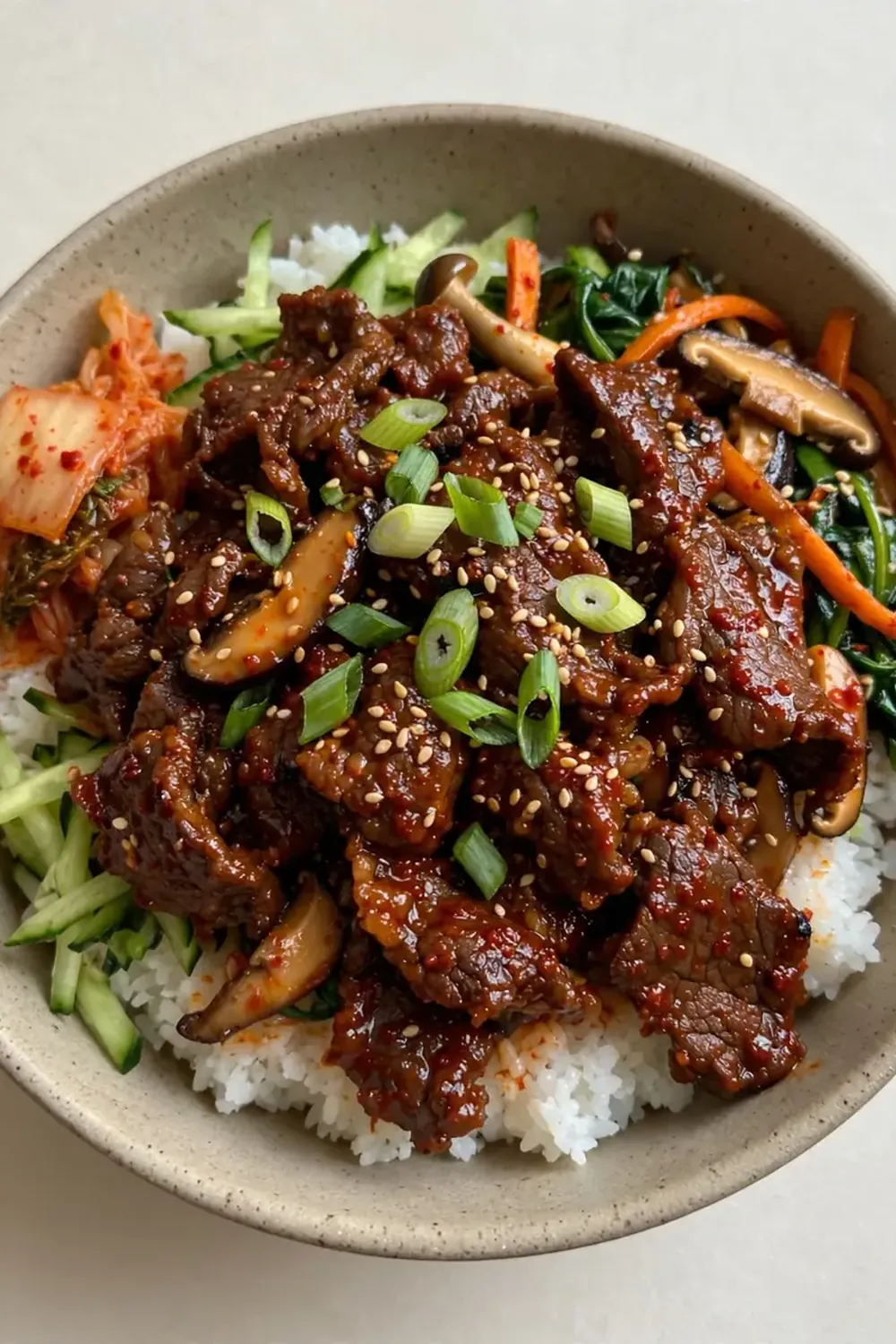
Ingredients You’ll Need
- 500g beef mince (15-20% fat works best for flavour)
- 4 tablespoons soy sauce
- 2 tablespoons gochujang (Korean chilli paste)
- 2 tablespoons brown sugar
- 1 tablespoon sesame oil
- 4 cloves garlic, finely minced
- 1 tablespoon fresh ginger, grated
- 2 spring onions, thinly sliced
- 1 tablespoon vegetable oil, for frying
- 400g cooked white or brown rice (about 2 cups dry rice, cooked)
- 1 large carrot, julienned or grated
- 200g frozen edamame beans, thawed
- 4 large eggs (optional, for topping)
- 1 tablespoon toasted sesame seeds, for garnish
- Kimchi, to serve (optional)
Tip: For the best texture, use beef mince that isn’t too lean — the extra fat helps the meat stay juicy and prevents it from drying out during the high-heat cooking.
How to Make Spicy Korean Beef Bulgogi Bowls
- Prepare the sauce first. In a small bowl, whisk together the soy sauce, gochujang, brown sugar, sesame oil, minced garlic, and grated ginger. Stir until the sugar has fully dissolved and the mixture looks glossy and smooth, with a deep red colour. Set this bowl near your stove so you can add it quickly once the meat is cooked.
- Brown the beef mince. Place your large frying pan or skillet over medium-high heat and add the vegetable oil. When the oil shimmers and you see a faint wisp of smoke, add the beef mince. Spread it out into an even layer and let it sit undisturbed for about 2 minutes — you want to hear a good sizzle. When the bottom is deeply browned and smells nutty and rich, break the meat apart with a wooden spoon. Continue cooking for another 3-4 minutes, stirring occasionally, until the beef is completely browned and no pink remains. You should see small crispy bits forming on the edges of the meat.
- Add the sauce and simmer. Pour the prepared sauce over the browned beef and stir to coat every piece. Reduce the heat to medium and let the mixture bubble gently for 3-4 minutes. The sauce will thicken and cling to the meat, turning a deep, sticky reddish-brown. You’ll smell the sweet-spicy aroma of the gochujang mingling with the savoury soy and garlic — this is the moment the kitchen starts to smell incredible.
- Taste and adjust seasoning. Take a small spoonful and taste it. If you want more heat, add an extra half-teaspoon of gochujang. If it needs more salt, a splash of soy sauce will do. The finished beef should be glossy, tender, and intensely flavourful, with a slight stickiness that coats the spoon.
- Prepare the vegetables and eggs (if using). While the beef simmers, quickly julienne the carrot and thaw the edamame under warm running water. If you’re adding eggs, wipe the pan clean after removing the beef, add a tiny splash of oil, and fry the eggs sunny-side up over medium heat until the whites are set and the edges are lacy and crisp — about 2-3 minutes. The yolk should still be runny when you press it gently.
- Assemble the bowls. Divide the warm rice evenly among four bowls. Spoon a generous portion of the spicy beef bulgogi over one side of the rice. Arrange the julienned carrot, edamame, and sliced spring onions in neat piles around the beef. Top each bowl with a fried egg if using, then sprinkle with toasted sesame seeds. Serve immediately, with a small side of kimchi if you like.
Tips From My Kitchen
- Cook the rice ahead of time: Rice is the one element that can slow you down. Cook a big batch the night before or earlier in the day, then spread it on a tray to cool quickly. When you’re ready to serve, simply reheat individual portions in the microwave for 30 seconds. This shaves a full 20 minutes off your dinner prep.
- Double the sauce for later: The sauce mixture keeps beautifully in a sealed jar in the fridge for up to a week. I always make a double batch when I’m already measuring out the ingredients. On a frantic Wednesday, all I need to do is brown some mince and pour in the pre-made sauce — dinner is on the table in under 10 minutes.
- Use a microplane for garlic and ginger: A microplane grater turns garlic and ginger into a fine paste that melts into the sauce rather than leaving chunky bits. This means the flavour is distributed evenly throughout every bite, and you won’t get an unexpected hit of raw garlic.
- Don’t overcrowd the pan: If you’re doubling the recipe, cook the beef in two batches. When too much meat is in the pan at once, it steams instead of browning, and you lose that deep, caramelised flavour that makes bulgogi so special. The sizzle should be loud and vigorous.
- Let the beef rest briefly: After you finish cooking the beef, let it sit in the pan off the heat for 2-3 minutes before serving. This allows the sauce to thicken further and cling more tightly to the meat. You’ll notice the difference when you spoon it over the rice — it won’t make the rice soggy.
Equipment You’ll Need
- Large frying pan or skillet (a 30cm pan works perfectly)
- Sharp knife and cutting board
- Mixing bowls (one small for the sauce, one medium for vegetables)
- Wooden spoon or spatula for breaking up the mince
- Microplane or fine grater (optional but highly recommended)
Delicious Variations to Try
- Spicy Version: For those who love serious heat, add 1-2 teaspoons of gochugaru (Korean red pepper flakes) along with the gochujang. You can also drizzle a little extra sesame oil mixed with chilli flakes over the finished bowls for a vibrant, fiery kick.
- Vegetarian/Vegan Option: Substitute the beef mince with 400g of firm tofu, crumbled, or a plant-based mince alternative. Cook it exactly as you would the beef, but be aware that plant-based options may release more water — let it cook an extra 2-3 minutes until the liquid evaporates and the texture becomes slightly chewy.
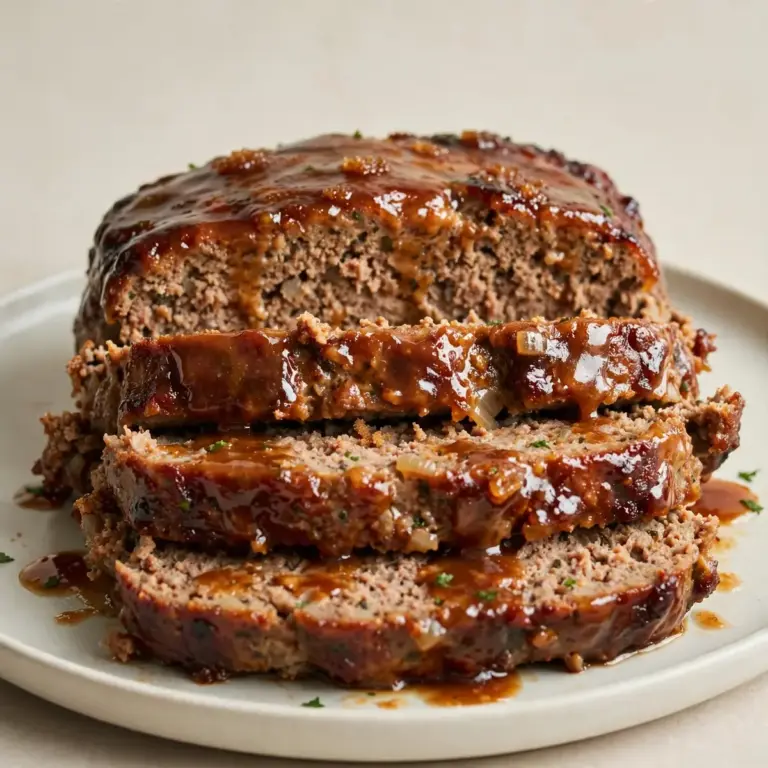
- Different Protein: This sauce works wonderfully with ground chicken, turkey, or even diced pork shoulder. If you use chicken, add a tablespoon of butter at the end for richness. For a leaner option, try our Turkey Meatloaf With Glaze approach to seasoning the mince.
What to Serve With Spicy Korean Beef Bulgogi Bowls
- A simple cucumber salad with rice vinegar and a pinch of salt
- Steamed or roasted broccoli tossed with a splash of soy sauce
- Quick pickled radishes or carrots for a tangy crunch
- A side of Spicy Grilled Chicken Wings if you’re feeding a hungrier crowd
- Cold barley tea or iced green tea to balance the heat
Still hungry for ideas? You might also love Korean Bbq Steak Rice Bowls Recipe, Ground Beef Taco Bowls With Cilantro Lime Rice from our sister kitchens.
Frequently Asked Questions
Spicy Korean Beef Bulgogi Bowls
Ingredients
Method
-
Prepare the sauce first. In a small bowl, whisk together the soy sauce, gochujang, brown sugar, sesame oil, minced garlic, and grated ginger. Stir until the sugar has fully dissolved and the mixture looks glossy and smooth, with a deep red colour. Set this bowl near your stove so you can add it quickly once the meat is cooked.
-
Brown the beef mince. Place your large frying pan or skillet over medium-high heat and add the vegetable oil. When the oil shimmers and you see a faint wisp of smoke, add the beef mince. Spread it out into an even layer and let it sit undisturbed for about 2 minutes — you want to hear a good sizzle. When the bottom is deeply browned and smells nutty and rich, break the meat apart with a wooden spoon. Continue cooking for another 3-4 minutes, stirring occasionally, until the beef is completely browned and no pink remains. You should see small crispy bits forming on the edges of the meat.
-
Add the sauce and simmer. Pour the prepared sauce over the browned beef and stir to coat every piece. Reduce the heat to medium and let the mixture bubble gently for 3-4 minutes. The sauce will thicken and cling to the meat, turning a deep, sticky reddish-brown. You’ll smell the sweet-spicy aroma of the gochujang mingling with the savoury soy and garlic — this is the moment the kitchen starts to smell incredible.
-
Taste and adjust seasoning. Take a small spoonful and taste it. If you want more heat, add an extra half-teaspoon of gochujang. If it needs more salt, a splash of soy sauce will do. The finished beef should be glossy, tender, and intensely flavourful, with a slight stickiness that coats the spoon.
-
Prepare the vegetables and eggs (if using). While the beef simmers, quickly julienne the carrot and thaw the edamame under warm running water. If you’re adding eggs, wipe the pan clean after removing the beef, add a tiny splash of oil, and fry the eggs sunny-side up over medium heat until the whites are set and the edges are lacy and crisp — about 2-3 minutes. The yolk should still be runny when you press it gently.
-
Assemble the bowls. Divide the warm rice evenly among four bowls. Spoon a generous portion of the spicy beef bulgogi over one side of the rice. Arrange the julienned carrot, edamame, and sliced spring onions in neat piles around the beef. Top each bowl with a fried egg if using, then sprinkle with toasted sesame seeds. Serve immediately, with a small side of kimchi if you like.
Notes
I hope this Spicy Korean Beef Bulgogi Bowls becomes your go-to for those evenings when you need something genuinely satisfying without spending an hour in the kitchen. This was inspired by a dish I had at a little restaurant in Korea, where the cook showed me how a handful of ingredients and a hot pan could create something unforgettable. This was inspired by a dish I had at a little restaurant in Korea, and I’ve adapted it so it works for our busy family lives. Have you tried it yet? I’d love to hear how it turned out for your family — drop a comment below and tell me what variations you experimented with.